Where roof leaks start on Old Bridge homes
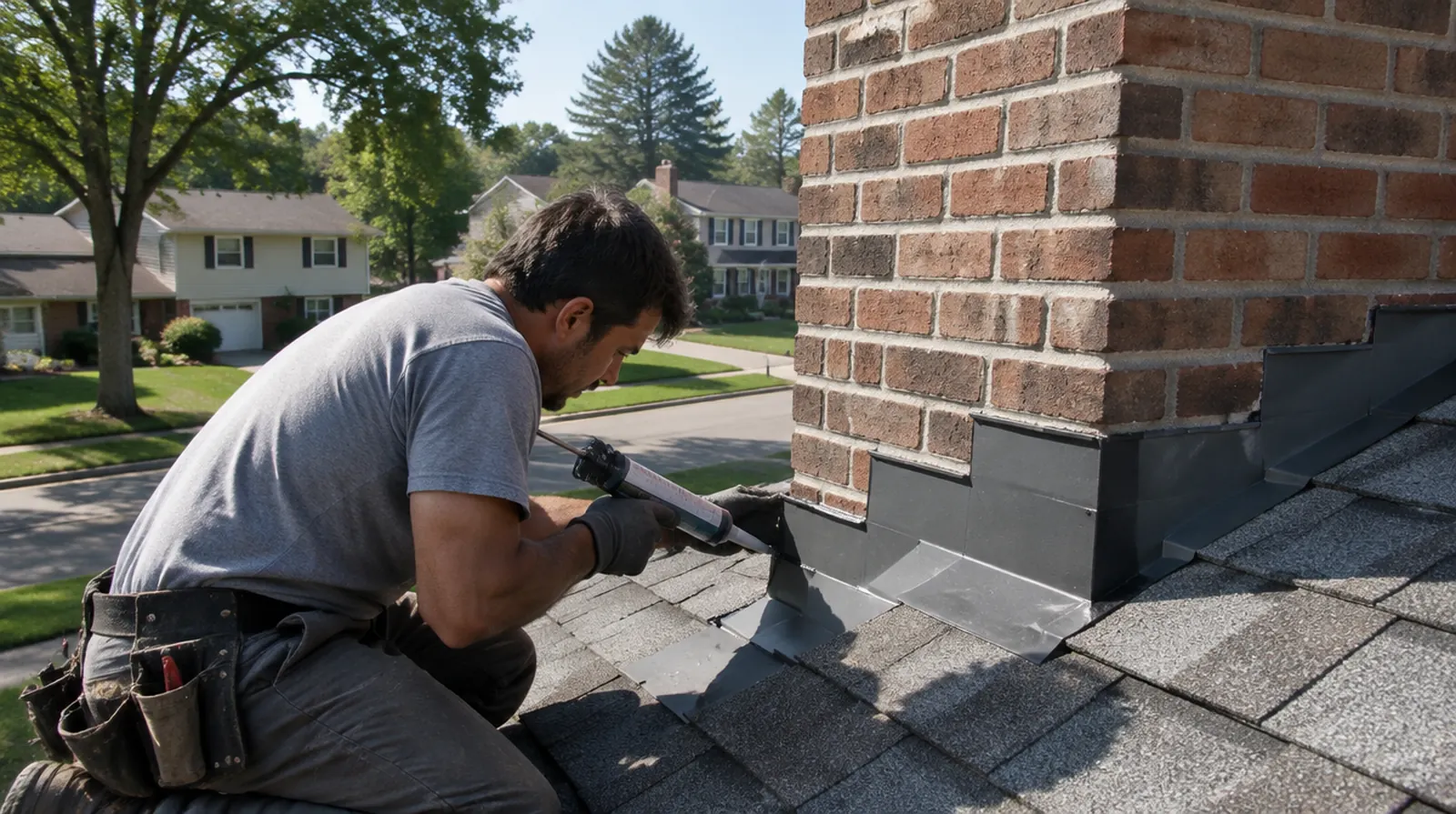
- Chimney flashing. Old step and counter-flashing, cracked mortar and worn crowns let water in around brick chimneys.
- Ice dams. Meltwater backs up under shingles at the eaves, staining exterior walls and window frames.
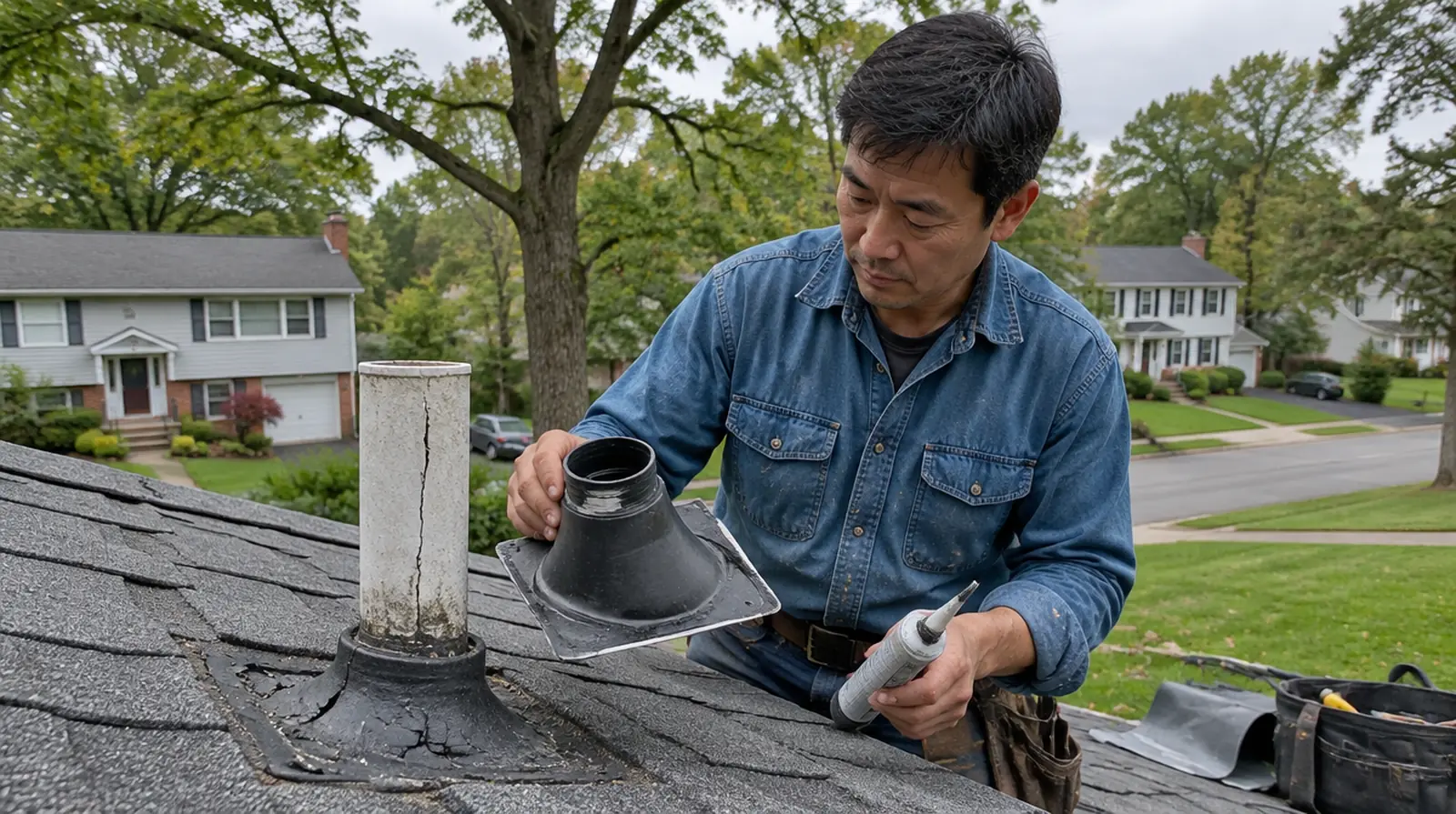
- Pipe boots. Rubber collars around vents crack with age and let water run down the pipe.
- Walls and dormers. Missing kick-outs and short step flashing let water slip behind siding.
- Wind damage. Lifted or missing shingles after a storm expose the underlayment.
- Skylights. Curb flashing and seals fail over time.
How we find and fix a roof leak
We start inside, looking at the stain and noting its location. Then we go into the attic and follow any water trails along rafters and sheathing toward the roof. Water often travels before it drips, so the entry point may be several feet from the stain. On the roof, we check every likely source in that area and, when needed, run a controlled water test to confirm it.
Once we find it, we fix the cause. That might mean new chimney flashing, a new pipe boot, rebuilt wall flashing, replaced shingles or ice barrier at the eaves. We also check for damp sheathing or insulation and let you know what we see inside.
Roof leak repair for ice dam leaks
Ice dam leaks show up in winter, often along exterior walls or around windows on the top floor. Short-term, we can safely remove ice from the eaves to let water drain. Long-term, the fix is ice barrier at the eaves during the next roofing work, plus attic insulation and ventilation improvements that keep the roof deck cold. We explain the options and costs so you can decide.
Leaks that keep coming back
If a leak has been "fixed" more than once, the true source probably was not found. Tar smeared over a symptom rarely lasts through a Jersey winter. We look past earlier patches to the real cause. If your roof has several problems, our roof repair service can handle them together.
What to do while you wait
Move valuables, put a bucket under drips and, if a ceiling is bulging with water, poke a small hole to let it drain into the bucket. Call us, and we will tarp the area if needed until a permanent repair is possible.
Leaks at split-level walls
On split-level and bi-level homes, many leaks start where a lower roof meets the wall of the upper level. Water runs down that wall and needs step flashing and a kick-out to carry it into the gutter. When those are short or missing, water slips behind siding and shows up on a ceiling or around a window below. Rebuilding that flashing usually ends the problem.
Chimney leaks in detail
Older brick chimneys have three common leak paths: the flashing at the roof, the mortar joints and the crown at the top. We check each one, then reflash, repoint or seal the crown as needed. Where a chimney is no longer used, we can discuss capping it.
Keeping records
We send photos of the problem and the repair, useful if you sell or need to show your insurer what was done.
Leaks around skylights
Older skylights leak at the curb flashing or through failed seals in the unit itself. We test both and recommend reflashing the curb or replacing the skylight, depending on which is the real source.
Roof leak repair FAQs
Can you find a leak when it is not raining?
Usually, through attic tracing and a controlled water test.
How long does a leak repair take?
Most leaks are found and fixed in one visit.
Can you help with ice dams?
Yes, both short-term and long-term.
How do I schedule?
Call (848) 321-5666.
Have an active roof leak?
Call (848) 321-5666 and tell us what you are seeing. We will set a time to trace it.