Why Old Bridge owners are switching to metal
Most houses in the township were built from the 1950s through the 1980s, and many are now on a second or third asphalt roof. Each tear-off means another dumpster in the driveway and another round of shingle edges lifting after the next coastal storm. A well-installed metal roof is a one-time decision for most families. Panels lock together or fasten under the seam, so there are no tabs for wind to grab, and snow slides off instead of sitting at the eaves where ice dams start.
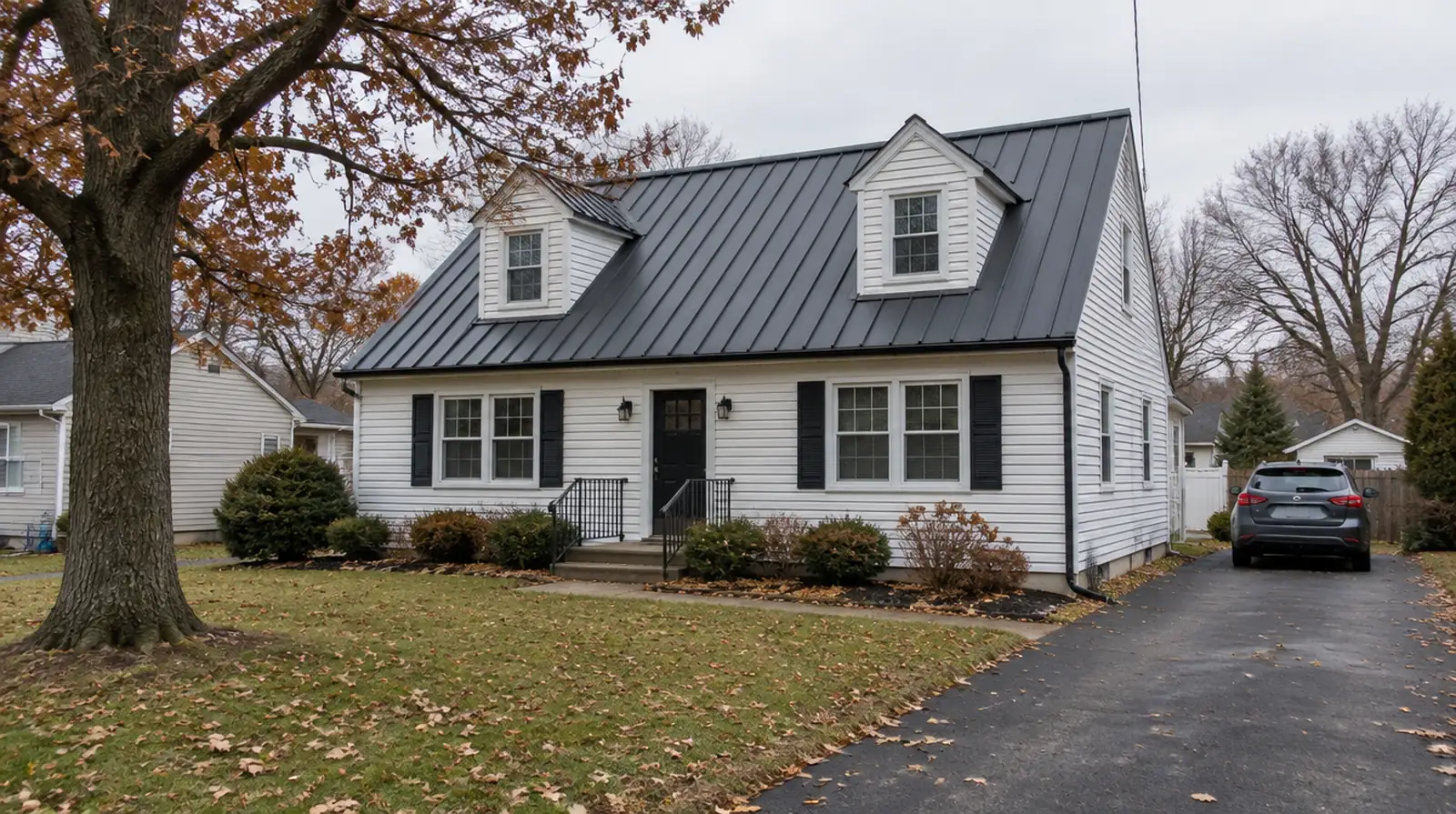
It also suits the way houses here were built. Cape Cods with dormers, split-levels with roofs at two heights and ranches with long, simple gables all take metal well. Additions with low-pitch roofs, which are often the leak point on older homes, can get panels rated for slopes too shallow for shingles.
Panel types we install
- Standing seam. Smooth panels joined by raised seams with concealed clips. This is the cleanest look and the most weather-tight option for living space.
- Metal shingles and shakes. Stamped steel or aluminum that reads like a traditional roof from the street, a good fit if you want the durability without a modern look.
- Exposed-fastener panels. Ribbed panels screwed through the face. Best for detached garages, sheds and outbuildings rather than the main house.
Bayshore homes need the right metal
Salt air off Raritan Bay is hard on steel. For homes in Laurence Harbor, Cliffwood Beach and the streets close to the water, we usually recommend aluminum panels and stainless or matched fasteners, because aluminum does not rust the way coated steel can once a cut edge is exposed. Farther inland, toward Cheesequake, Route 9 and the Route 18 corridor, painted Galvalume steel is the common choice and holds up well. We will tell you which side of that line your house is on and why.
Many bayshore homes were repaired or raised after Hurricane Sandy flooded the waterfront in 2012. Raised houses catch more wind, and their roofs need careful edge and ridge detailing. We size clips and trim for that exposure rather than using one spec for the whole town.
How an installation goes
- Roof visit. We check the deck from the attic, note soft spots and look at ventilation, chimneys and skylights.
- Written quote. Panel type, gauge, color, trim and underlayment are listed so you can compare apples to apples.
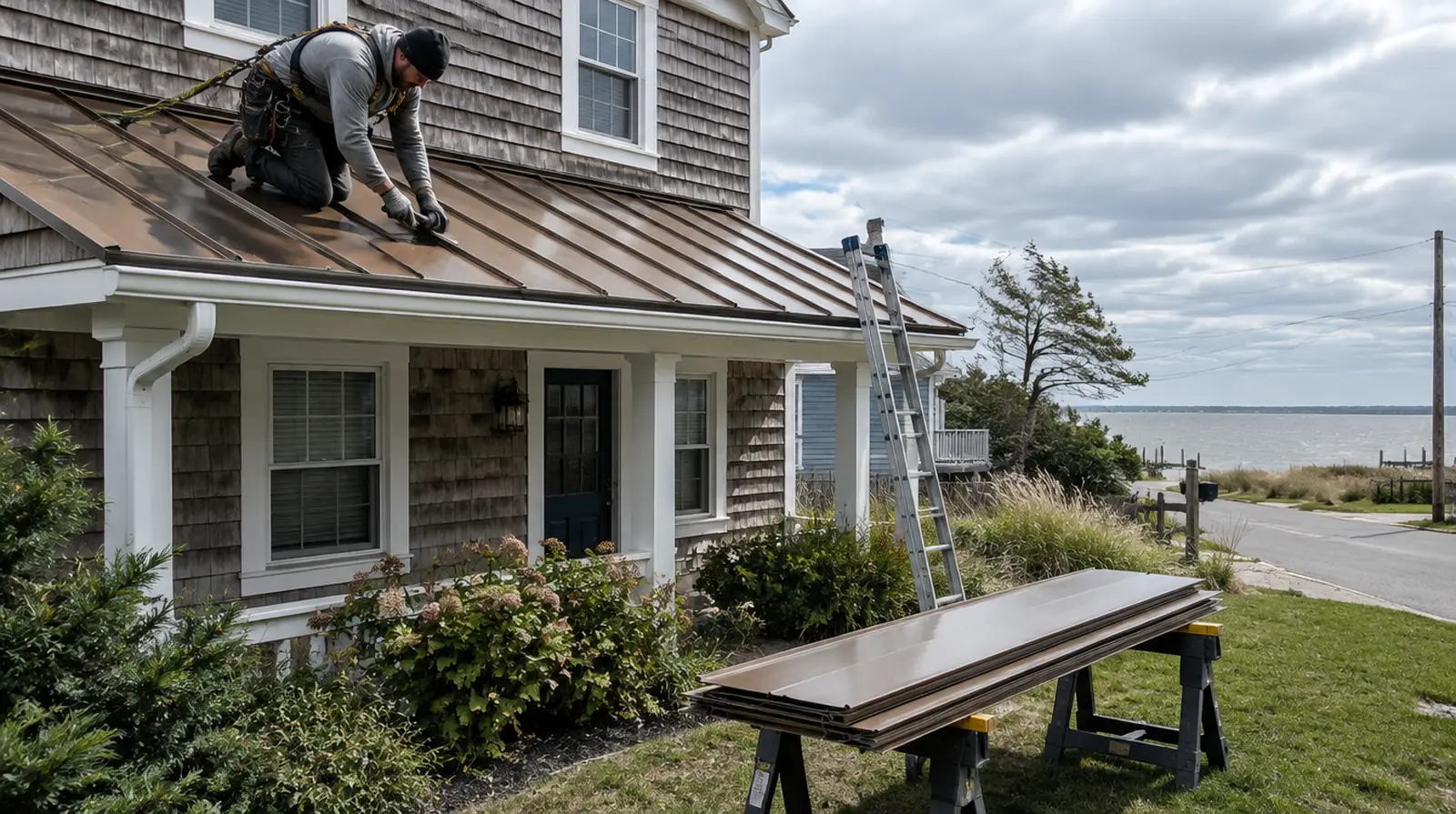
- Tear-off and deck repair. Old shingles come off, damaged sheathing is replaced and the deck is nailed tight.
- Underlayment. Ice barrier along the eaves and valleys, with high-temperature synthetic underlayment across the field so moisture under the panels can escape.
- Panels and flashing. Custom trim at chimneys, dormer walls and pipe boots. Brick chimneys on older homes get counterflashing cut into the mortar.
- Snow guards and cleanup. Guards go over walkways, decks and doors, and we sweep the yard with magnets for stray fasteners.
Most single-family homes take a few working days once materials arrive. Custom colors and trim can add lead time, so fall jobs are best booked by late summer.
Snow, ice and sliding
Metal sheds snow, which is the point, but a sheet of snow leaving a steep roof can bury a bush or hit someone at the front door. We plan snow guard placement around how you use the house: the side door you actually walk through, the back deck and the driveway. Proper attic airflow is still part of the job, because a warm attic can still form ice at the eaves under any roof.
Cost and what you get back
A metal roof costs more up front than architectural shingles, often by a wide margin. What you get is a much longer service life, far fewer repair calls after storms and a roof that will likely outlast the house's next owner. Many homeowners also plan solar panels; standing seam lets mounts clamp to the seams without drilling through the roof.
Questions we hear
Is a metal roof loud in the rain?
Over a solid deck with underlayment and an insulated attic, rain sounds about the same as on shingles.
Can you put metal over my old shingles?
We usually do not. Tearing off lets us check and fix the deck, which is where most hidden damage hides on older township homes.
Will it dent?
Heavier gauge panels resist typical hail well. Falling limbs from big oaks can dent any roof, which is another reason to keep trees trimmed.
Thinking about metal for your Old Bridge roof?
Call (848) 321-5666 and we will measure the roof, check the deck and walk you through panel and color options with a written price.