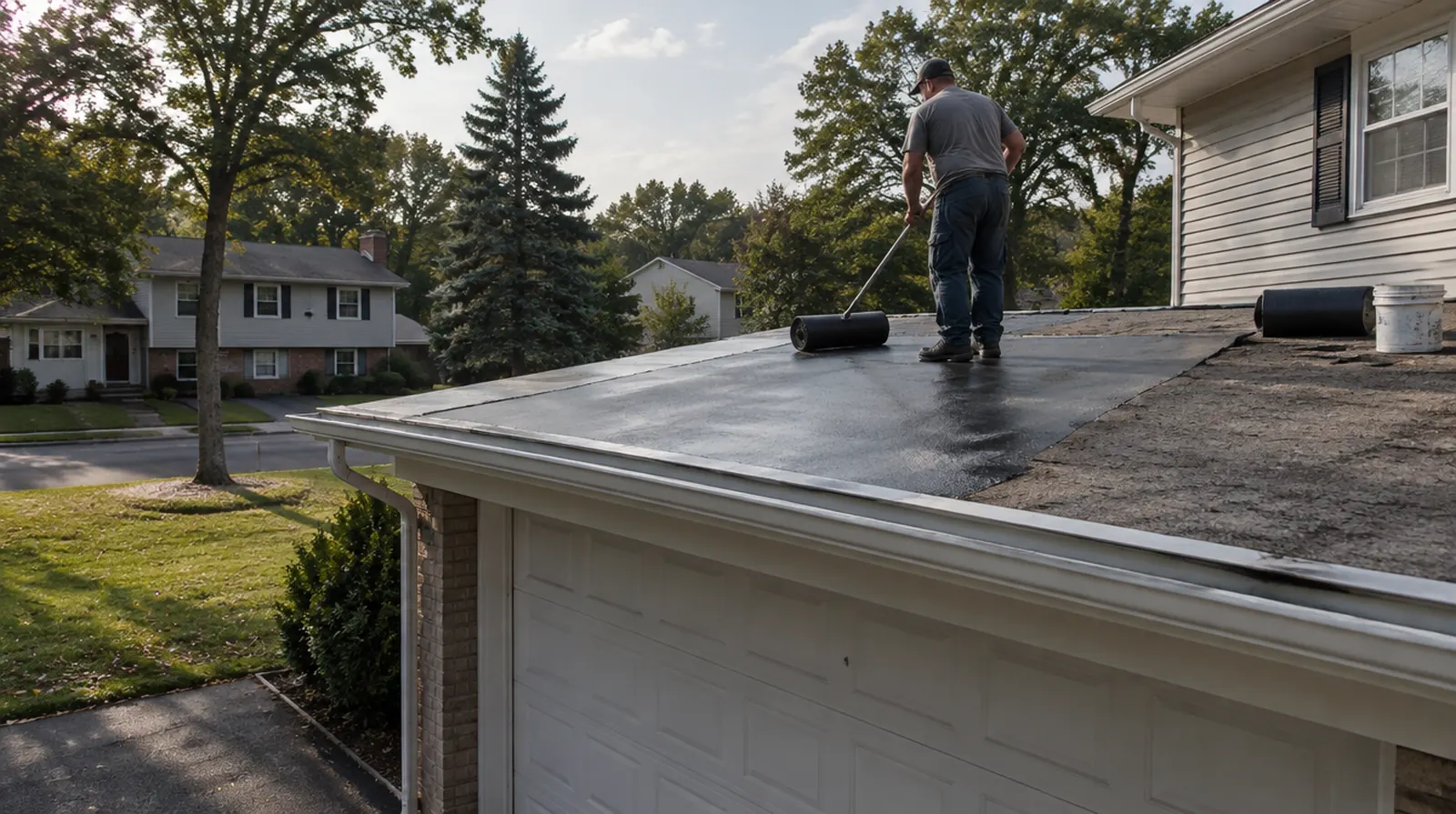
Flat roof repair problems in Old Bridge
Low-slope roofs here deal with snow loads, freeze-thaw cycles and humid summers. Water that ponds after a storm can freeze, expand and open seams. Membranes dry out and crack over time, and blisters form where moisture is trapped. Older roll roofing on porches and additions often has cracks at the edges and around vents.
Where a flat section meets a wall or a sloped roof, flashing is a frequent failure point. Ice and snow pile up at that transition, and meltwater finds any gap.
How we repair a flat roof
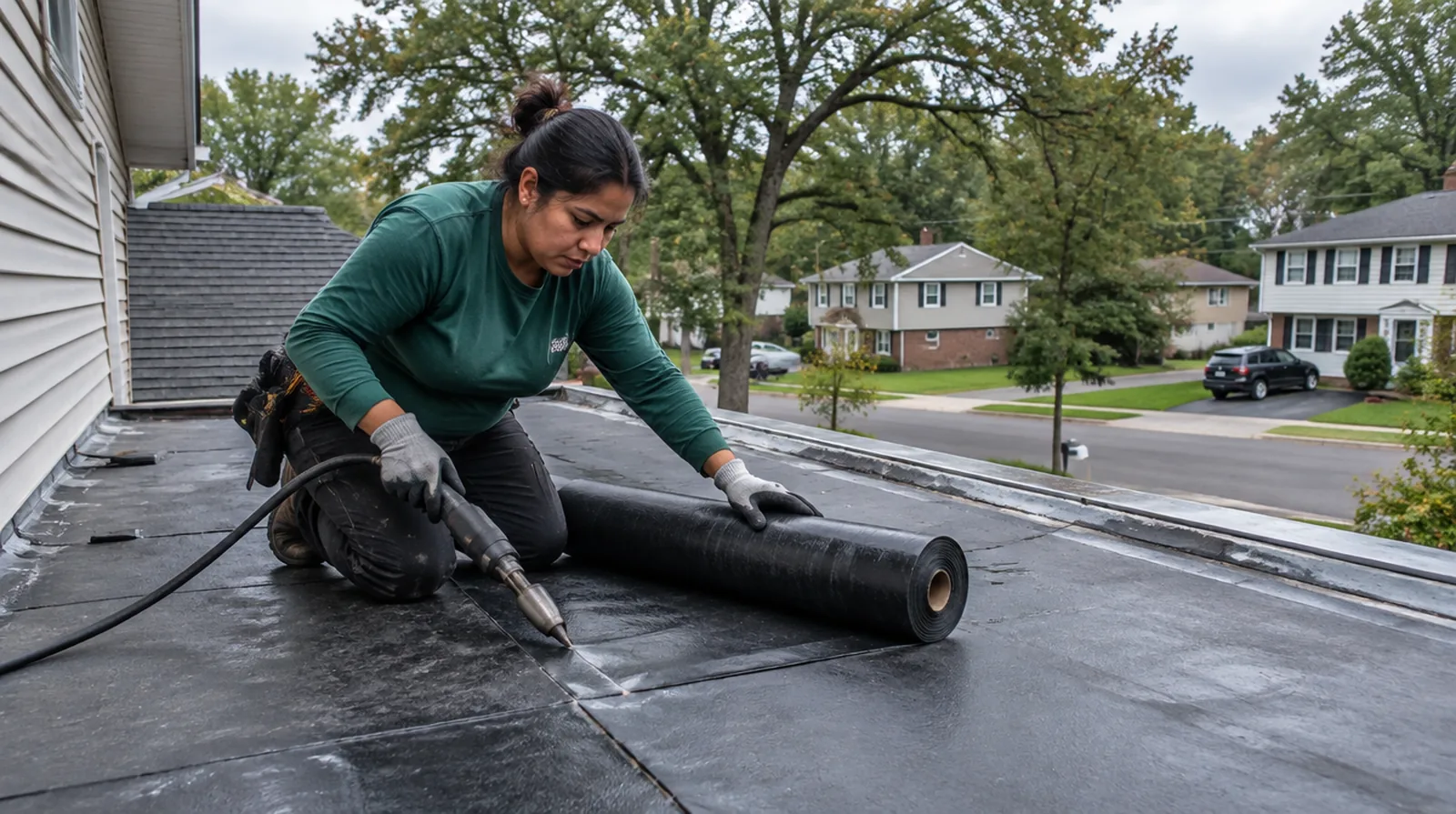
We inspect the whole low-slope area, not just where it leaked. We check seams, edges, drains, scuppers and penetrations, and probe for soft spots that suggest wet insulation or decking. Then we explain what we found and recommend a fix.
Small failures are patched with materials compatible with the existing membrane, whether that is modified bitumen, EPDM or roll roofing. Failed seams are cleaned and resealed. At walls, we rebuild flashing and counter-flashing so water runs off instead of behind. When ponding is the root cause, we can add tapered insulation, improve a drain or add a scupper.
Flat roof repair or replacement?
If the membrane is still flexible and damage is limited, repair is good value. If the surface is brittle, has many patches, or the insulation beneath is soaked, replacement is usually the better choice. We show you photos and explain the reasoning.
Flat roof repair and winter snow
Snow sitting on a low-slope roof melts slowly and can refreeze overnight. If drains or scuppers are blocked with leaves or ice, water has nowhere to go. We clear and test drainage during every repair and can suggest changes, like a larger scupper or a heated cable at a problem drain, that help in winter.
Porch and sunroom roofs
Many flat sections we repair cover porches or sunrooms added years after the house was built. The connection to the main house is often the weak point. We check that tie-in carefully and rebuild it when needed so it sheds water cleanly.
Timing your repair
Late summer and fall are ideal, before snow arrives. We can make many repairs year-round on dry days and temporarily seal leaks in bad weather.
Membrane choices for low-slope sections
Modified bitumen and EPDM are the two most common membranes we see on Old Bridge porch and addition roofs. Modified bitumen is tough and handles foot traffic well. EPDM is flexible and resists cracking in cold weather. When a section needs replacement, we explain which material suits your roof, how it ties into adjacent shingles and what maintenance it needs.
Dormer and rear shed roofs
Some Cape Cods and older homes have shed dormers or rear additions with very low pitch, too shallow for shingles to shed water reliably. Those roofs often leak at the transition to the main roof. Switching that section to a proper low-slope membrane, with good flashing at the tie-in, usually solves it.
Coatings for low-slope roofs
A reflective coating over a sound membrane can reduce summer surface heat and add some life. It is not a fix for a failing roof, though. We tell you honestly whether a coating makes sense or if repairs need to come first, and we only coat surfaces that are clean, dry and intact.
We also check skylights, vent stacks and any AC equipment on the low-slope section, sealing around each and adding walkway pads where technicians will step.
Each repair ends with a water test at the drains and a set of photos for your records.
Flat roof repair FAQs
How long does a repair take?
Most take a few hours to a day.
Can you fix ponding?
Often, yes, with added slope, a drain or a scupper.
Do you repair porch roofs?
Yes, including where they tie into the house.
How do I schedule?
Call (848) 321-5666.
Have a low-slope leak?
Call (848) 321-5666 for a free flat roof repair look.